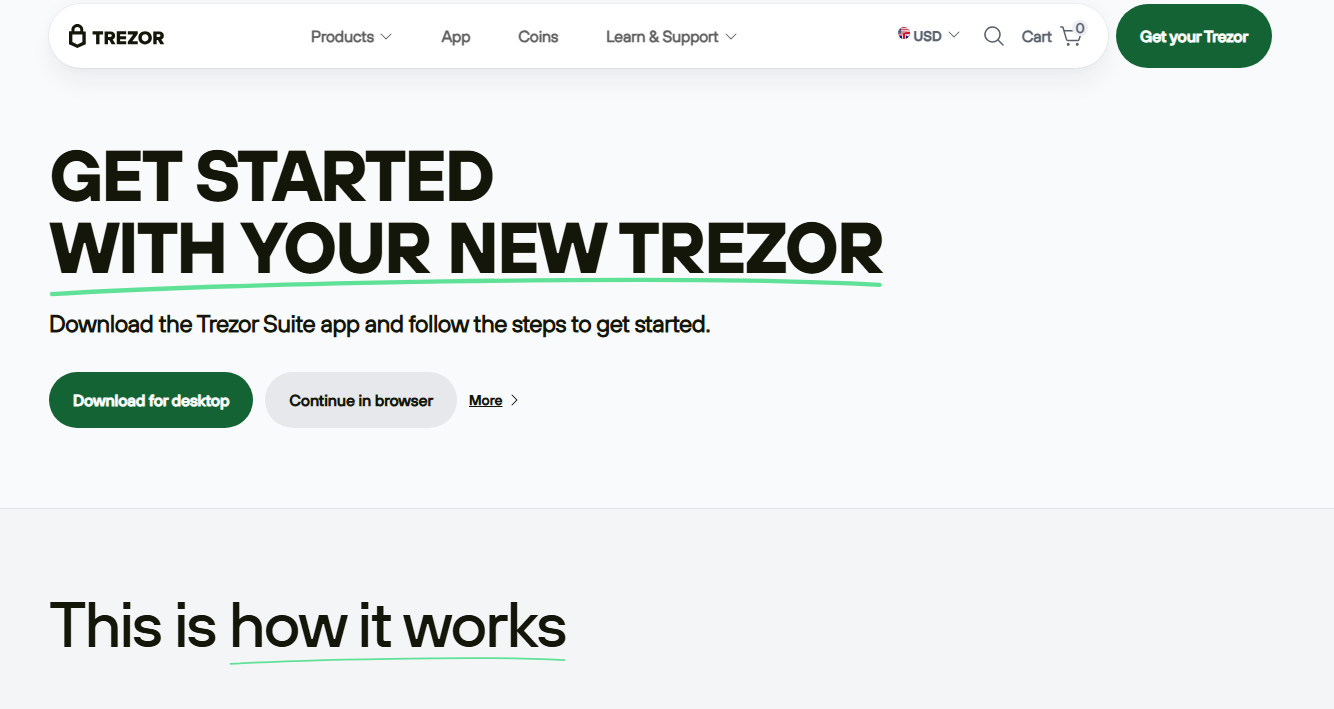
Trezor Login – Complete Secure Access Guide
A beginner-friendly, deeply detailed walkthrough to safely access your Trezor hardware wallet and manage your crypto with confidence.
Trezor Login is not your typical username-and-password process. Instead, it is a hardened security flow where your
physical hardware wallet becomes your identity. The Trezor device ensures that your private keys never touch the
internet, allowing you to manage crypto assets securely through Trezor Suite. Whether you are a total beginner or
an intermediate crypto user, understanding the Trezor Login process is crucial for maintaining full control over your
digital wealth.
Think of your Trezor as your personal, offline vault. Logging in is like unlocking that vault using a PIN and, if enabled, a passphrase. With remote attacks nearly impossible, the Trezor Login system is one of the safest ways to access and manage cryptocurrency today.
Think of your Trezor as your personal, offline vault. Logging in is like unlocking that vault using a PIN and, if enabled, a passphrase. With remote attacks nearly impossible, the Trezor Login system is one of the safest ways to access and manage cryptocurrency today.
Why the Trezor Login System Matters
The Trezor Login flow prioritizes local, device-based verification. Instead of trusting servers or online accounts,
you prove your identity through a secure hardware device in your hand. This system minimizes the possibility of:
- Remote hacking attempts
- Phishing traps
- Keylogging attacks
- Unauthorized access
How to Perform a Secure Trezor Login (Step-by-Step)
Step 1: Open Trezor Suite
Launch the official Trezor Suite application on your desktop. This is the main interface for portfolio
management, transactions, staking, account overviews, and security settings. Always use official software to
avoid tampered versions.
Step 2: Connect Your Trezor Device
Plug your Trezor Model One or Model T into your computer using a reliable USB cable. Trezor Suite will
automatically detect the device and prompt you to continue with the login process.
Step 3: Enter Your PIN
A randomized PIN layout appears on your device’s screen. Enter it using your computer by matching the
positions. This randomized grid protects against keyloggers and screen-capturing malware.
Step 4: Enter Your Passphrase (If Enabled)
A passphrase acts as an extra security layer, creating what is essentially a hidden wallet. You can enter it on
the Suite or directly on the device, depending on your security preferences.
Step 5: Access Your Dashboard
After successful login, you can view your balances, track market performance, send and receive crypto, enable
coin-specific features, and customize security settings. All sensitive actions require confirmation on the
device itself.
Why Physical Confirmation Changes Everything
Imagine a hacker controlling your computer remotely. Even if they click “Send” on a transaction, the Trezor device
will reveal the real destination address on its screen. Unless you physically confirm it, the transfer cannot occur.
This makes Trezor Login fundamentally different from every online-only wallet system.
Trezor Login vs. Traditional Crypto Logins
| Feature | Trezor Login | Traditional Login |
| Private Key Storage | Offline on device | Online or on software |
| Authentication | PIN + physical confirmation | Username + password |
| Vulnerability Level | Extremely low | Moderate to high |
| Device Requirement | Hardware wallet required | None |
Key Terms to Know for Trezor Login
PIN: A unique code protecting your device.
Passphrase: An optional extra layer creating hidden wallets.
Cold Storage: Offline protection of private keys.
Trezor Suite: The official app for managing your portfolio.
Recovery Seed: Your universal backup for restoring your wallet.
Passphrase: An optional extra layer creating hidden wallets.
Cold Storage: Offline protection of private keys.
Trezor Suite: The official app for managing your portfolio.
Recovery Seed: Your universal backup for restoring your wallet.
Troubleshooting Trezor Login Issues
Device Not Detected
Try a different USB cable, update Trezor Suite, or restart your computer.
Forgot Your PIN?
You must reset the device and restore using your recovery seed.
Firmware Issues
Perform a firmware update through Trezor Suite and follow on-device instructions.
Frequently Asked Questions
Is a Trezor device required for login?
Yes, the hardware wallet is mandatory for authentication.
Do I need my recovery seed for Trezor Login?
No. The seed is only required for restoring wallets.
Can I use Trezor Login on mobile?
Yes, Trezor Suite mobile features support certain functions, depending on device compatibility.
Trezor Login – Your Gateway to Safe, Private, and Fully Controlled Crypto Access